


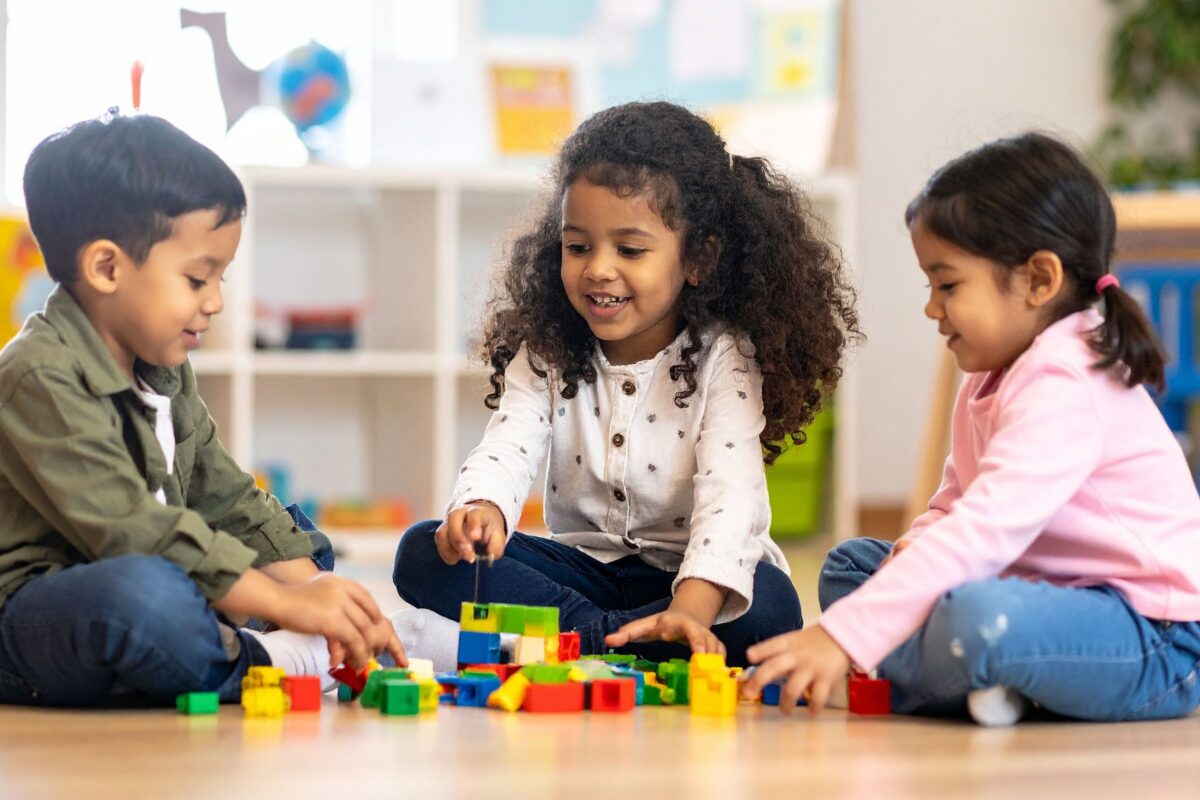
When parents compare educational options, one of the most common distinctions they explore is Montessori classroom structure vs. traditional classroom. Understanding how these environments differ can make the choice clearer—especially in early years when the impact of a classroom environment is profound.
Montessori Classroom Structure
Prepared Environment
In Montessori, classrooms are carefully organized with materials on low shelves, child-sized furniture, and defined work areas (practical life, sensorial, language, math, culture). The environment is designed to support independence and exploration.
Mixed-Age Groupings
Rather than dividing strictly by age, Montessori classrooms mix ages (e.g., 3–6). Older children mentor younger ones, and younger children benefit from observing advanced peers. This collaborative structure reinforces leadership and social growth.
Teacher as Guide
The teacher observes and offers lessons selectively—stepping in only when needed. The role is to empower the child’s own learning, not to dictate it.
Freedom Within Limits
Children choose their own work, within established boundaries. They decide when to move, when to repeat tasks, and how long to engage. This self-directed rhythm encourages autonomy.
Traditional Classroom Structure
Fixed Seating & Group Instruction
Traditional classrooms often use desks in rows, group instruction led by the teacher, and a uniform daily schedule.
Age-Based Homogeneous Classes
Students are grouped strictly by age, limiting exposure to leadership dynamics and peer teaching.
Teacher-Led Curriculum
The teacher directs most learning, frequently using lectures, worksheets, and standardized instruction.
Uniform Pacing
All children follow the same schedule and pacing. Stragglers may get left behind, and advanced learners may be held back.
Key Contrasts & What They Mean for Learning
- Pace & Personalization: Montessori adapts to individual learners; traditional classes follow a set pace.
- Role of Materials: Montessori uses tactile, self-correcting materials to invite discovery. Traditional models rely more on textbooks and worksheets.
- Discipline vs. Self-Regulation: Montessori’s structure fosters inner discipline; traditional models often enforce external rules.
- Community Culture: Montessori classrooms tend toward a collaborative, respectful culture; traditional classrooms may lean on teacher authority.
Benefits of a Classroom with a Montessori Foundation
Choosing a classroom is more than just finding a place to keep your child safe—it’s about selecting an environment that supports growth, curiosity, and development. The benefits of daycare with a Montessori foundation approach combines the structure of daycare with the educational depth of Montessori, offering unique advantages for young learners.
Cognitive, Emotional & Social Benefits
Enhanced Focus & Concentration
Montessori-inspired daycare environments are designed to reduce distractions and invite children to engage deeply with materials. Research indicates children in Montessori settings often demonstrate stronger executive function, concentration, and academic performance compared to peers in traditional models.
Building Independence & Confidence
In a Montessori daycare, children are encouraged to complete tasks themselves, from pouring water to organizing their space. These everyday “practical life” experiences build self-esteem and reinforce the belief that “I can do it.”
Social-Emotional Growth
Montessori methods emphasize collaboration, empathy, and peer learning. Mixed-age classrooms allow younger children to learn from older peers, and older children to build leadership and patience. This dynamic fosters strong social and emotional skills.
Long-Term Benefits & Well-Being
Longitudinal studies and meta-analyses show that Montessori education not only offers short-term developmental advantages but also contributes to well-being, emotional stability, and academic success later in life.
What to Look for in a Montessori-Based Classroom
- Prepared, calm environments with accessible materials
- Mixed-age classrooms enabling peer learning
- Trained Montessori educators who observe first, intervene gently
- Freedom within limits, where children choose their work
- Consistent routines and respect for each child’s pace
A daycare with a Montessori foundation offers much more than basic care—it nurtures a child’s cognitive, emotional, and social growth in a respectful, structured, and meaningful way. For parents seeking an enriching early childhood setting, this approach offers a holistic foundation for lifelong learning.
Which Structure Supports Early Development Best?
Many studies suggest Montessori settings foster stronger executive function, creativity, and social-emotional skills compared to conventional classrooms. That said, the ideal choice depends on the quality of implementation—not just the name on the door.
The differences between Montessori classroom structure vs. traditional classroom are more than aesthetic. They reflect deeper philosophies about how children learn. For families seeking a learning space that honors autonomy, rhythm, and community, Montessori offers a thoughtfully designed path.
Frequently Asked Questions
What is the difference between a Montessori classroom and a traditional classroom?
A Montessori classroom promotes independence with hands-on materials, mixed-age groups, and child-led learning. A traditional classroom setup usually involves rows of desks, same-age grouping, and teacher-led instruction with a fixed curriculum.
How does a Montessori classroom structure support early childhood development?
The Montessori classroom structure allows children to move freely, make choices, and learn at their own pace. This encourages independence, self-confidence, and critical thinking—key components of early childhood development.
Is Montessori education better than traditional education for young children?
Montessori education can be more effective for some children because it emphasizes individual learning styles, real-world experiences, and social-emotional development. However, the best fit depends on each child’s needs and family values.
What should I look for in a Montessori school in NJ?
When evaluating a Montessori school in NJ, look for certified Montessori teachers, mixed-age classrooms, hands-on learning materials, and an environment that encourages exploration, concentration, and respect for each child’s pace of learning.
Are Montessori teaching methods used in preschool and daycare settings?
Yes, many Montessori schools apply the Montessori teaching method in early childhood settings like preschools and daycares. These programs introduce practical life skills, sensory activities, and social learning even in toddler and infant classrooms.
What are the benefits of daycare with a Montessori foundation?
A daycare with a Montessori foundation supports your child’s development through independence, hands-on learning, and emotional growth. Children learn to make choices, concentrate, collaborate, and develop responsibility in a calm, respectful environment.
How is Montessori daycare different from traditional daycare?
Montessori daycare focuses on child-led learning, mixed-age classrooms, and respectful caregiving. Traditional daycares may follow a fixed schedule and emphasize group activities, while Montessori environments encourage exploration at a child’s own pace within a structured, prepared space.
Why choose a daycare center in Sparta, NJ with a Montessori foundation?
Families in Sparta, NJ choose Montessori-based daycare centers because they provide a balance of nurturing care and purposeful learning. Children benefit from individualized attention, early life skills, and a curriculum designed to support whole-child development.
What should I expect from a Montessori daycare near me?
A high-quality Montessori daycare near you should offer clean, organized classrooms with child-sized furniture, engaging materials, and low child-to-teacher ratios. Expect a peaceful environment, a focus on independence, and responsive, trained caregivers.
Is the Montessori approach right for toddlers?
Yes, the Montessori approach for toddlers is especially effective. It encourages early autonomy, motor skill development, and social-emotional awareness—all through meaningful, hands-on activities in a thoughtfully prepared space.
See how your child can flourish in a education system built with the Montessori System. Contact us to plan for success!